



Why Most Buyers Choose Wrong
POWNYM Jump Starters


The jump starter market is crowded with exaggerated specs, misleading ratings, and units that look impressive on paper but fail in real emergencies. This guide cuts through the noise by identifying the 7 specs that actually determine whether a jump starter will work for your vehicle and your needs.
Spec #1: Peak Amperage — Match It to Your Engine
This is the foundation. Your jump starter's peak rating must exceed your engine's cranking demand with a comfortable margin:

- Compact car (1.0–2.0L gas): 4000–6000A peak → POWNYM G987
- Sedan/SUV (2.0–4.0L gas, up to 3.0L diesel): 6000–8500A → POWNYM DN31 8500A
- Full-size truck/large diesel (up to 7.5L gas, 3.8L diesel): 9200–10000A → POWNYM DN31 10000A
Don't overbuy: A 10000A unit on a 1.5L Civic wastes money, adds weight, and provides no starting advantage. Don't underbuy: A 4000A unit on a 5.0L truck will fail when you need it most.
Spec #2: Internal Battery Capacity (mAh)
Capacity determines two things: how many jump starts per charge and how long it lasts as a power bank. Higher is better for both:
- 8000–10000mAh: 2–3 jump starts, 1–2 phone charges — budget range
- 12000–15000mAh: 4–6 jump starts, 3–4 phone charges — sweet spot for most drivers
- 20000mAh+: 8+ jump starts, 5+ phone charges — for commercial/shared use
Spec #3: Safety Protection Layers
A quality jump starter should have at least 6 protection circuits. POWNYM units include 8:

- ✅ Reverse polarity protection
- ✅ Short circuit protection
- ✅ Over-voltage cutoff
- ✅ Over-current protection
- ✅ Over-temperature shutdown
- ✅ Over-charge prevention
- ✅ Deep-discharge safeguard
- ✅ Spark-proof clamp design
Warning: Budget brands often list "8-layer protection" on the box but don't actually implement all circuits. Look for units that beep/alarm when clamps are reversed — this proves the polarity circuit works.
Spec #4: Multi-Functionality
Jump starters that combine multiple functions deliver more value per dollar:
- USB power bank: Universal — every quality unit includes this.
- LED flashlight: Essential for nighttime emergencies. Look for multiple modes (steady, SOS, strobe).
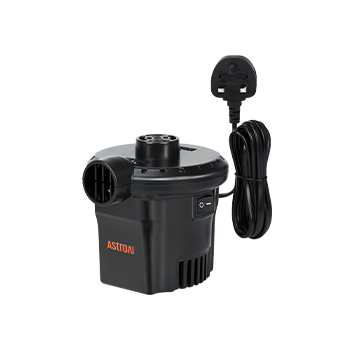
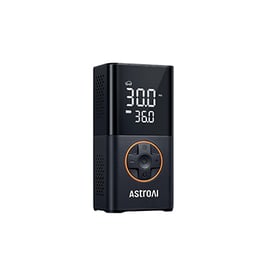
- Built-in air compressor: The POWNYM G963 and QB08X combine 4000A jump starting with 150 PSI inflation — two top roadside needs in one device. Compare this to buying a separate tire inflator.
- 12V output socket: Powers tire inflators, vacuums, and other 12V accessories.
Spec #5: Clamp Quality
Clamps are the physical interface between the jump starter and your battery. Poor clamps = unreliable starts:
- Clamp jaw width: Must open wide enough to grip car battery terminals (typically 15–20mm).
- Contact teeth: Sharp, copper teeth penetrate corrosion for better conductivity.
- Cable length: 12–18 inches is typical. Longer cables offer flexibility but add bulk.
- Spring tension: Clamps should grip firmly without manual pressure. Weak springs cause intermittent contact.
POWNYM clamps feature heavy-duty spring-loaded jaws with copper contact teeth and integrated spark-proof design.
Spec #6: Operating Temperature Range
If you drive in cold winters or hot summers, the operating range matters:
- Standard range: −10°C to +45°C — adequate for moderate climates
- Extended range: −20°C to +60°C — POWNYM units cover this wider range, essential for northern winters and desert summers
Spec #7: Warranty and Brand Reputation
- Warranty length: 1 year is standard; 18–24 months indicates manufacturer confidence
- Customer support: Can you reach the brand if the unit fails? Generic brands on marketplace sites often disappear after purchase.
- Verified reviews: Look for reviews mentioning specific vehicle starts (e.g., "started my 3.5L V6" is more useful than "works great")
- Established brand: POWNYM has a full product lineup, dedicated support, and consistent quality across models
POWNYM Jump Starter Lineup Summary
| Model | Peak Amps | Engine Support | Key Feature | Best For |
|---|---|---|---|---|
| G987 | 6000A | 6.0L gas / 3.0L diesel | Compact, lightweight | Small-mid cars, daily carry |
| DN31 8500A | 8500A | 7.0L gas / 3.6L diesel | Multi-mode LED | Sedans, SUVs, general use |
| DN31 9200A | 9200A | 7.2L gas / 3.5L diesel | Bright 3-mode light | Larger SUVs, trucks |
| DN31 10000A | 10000A | 7.5L gas / 3.8L diesel | 4-mode LED, heavy-duty | Full-size trucks, diesel |
| G963 | 4000A | 6.0L gas / 3.0L diesel | 150 PSI air compressor | Drivers needing both jump + inflate |
| QB08X | 4000A/9000A | 6.8L gas / 3.4L diesel | Air compressor + high-amp option | All-in-one roadside kit |
FAQ
Is it worth paying more for a higher-amp unit?
Only if your engine needs it. For a 2.0L car, a 6000A unit and a 10000A unit will start equally well. The extra money buys capability you won't use. Match the peak amps to your engine — that's the spec that matters most.
Should I buy a jump starter + air compressor combo or two separate devices?
If you drive a mid-size or smaller vehicle, the G963/QB08X combo is convenient — one device, one charging routine, less glove-box clutter. If you drive a large truck needing 10000A, buy the DN31 Heavy Duty for starting and a separate POWNYM tire inflator for inflation — no combo unit currently offers 10000A + compressor.