


Jump Starter Power Bank: Multi-Function Emergency Devices Explained
One of the most appealing features of modern lithium jump starters is their ability to double as a power bank. In an emergency — whether you're stranded with a dead battery and a dead phone, or you're camping off-grid — having one device that can both start your car and charge your phone is incredibly convenient. But how well does this dual-purpose approach actually work?
How the Power Bank Function Works
A lithium jump starter contains a large internal battery — typically 10,000-20,000 mAh. This is the same battery that delivers the 1,000-2,000 amp burst to start your engine. The USB output ports draw from this same battery but at much lower currents (1-3 amps for standard USB, up to 3 amps for USB-C PD).
This means the same energy that can start your car 15-25 times can also charge your phone 3-6 times, or power a tablet for 10-15 hours of use.
USB Output Specifications: What to Expect
| Port Type | Output | Charging Speed | Best For |
|---|---|---|---|
| USB-A (standard) | 5V / 2.1A | ~10W | Phones, small devices |
| USB-A (quick charge) | 5V/3A, 9V/2A | ~18W | Fast phone charging |
| USB-C PD | 5V/3A, 9V/3A, 15V/3A | ~45W | Tablets, laptops, fast charging |
| 12V DC output | 12V / 10A | ~120W | Air compressors, accessories |
A jump starter power bank with USB-C PD can charge a modern phone from 0 to 50% in about 30 minutes, and fully charge a laptop in 2-3 hours.
Charging Capacity: How Many Device Charges?
Here's what you can expect from a 15,000 mAh jump starter used as a power bank:
| Device | Battery Size | Full Charges |
|---|---|---|
| iPhone 15 Pro | 3,274 mAh | ~3.5 charges |
| Samsung Galaxy S24 | 4,000 mAh | ~3 charges |
| iPad Air | 7,606 mAh | ~1.5 charges |
| MacBook Air M2 | 13,000 mAh | ~0.8 charge (partial) |
| Apple Watch | 282 mAh | ~40+ charges |
Note: These are theoretical maximums. Real-world efficiency is about 70-80% due to voltage conversion losses.
The Tradeoff: Power Bank Use vs Jump Starting Readiness
Here's the critical consideration: every time you use the USB port, you drain the battery that you need for jump starting. This creates a potential conflict:
- Fully charge your phone = use 15-20% of the jump starter's battery
- Fully charge a tablet = use 30-40% of the jump starter's battery
- Fully charge a laptop = use 60-80% of the jump starter's battery
If you've used the power bank function extensively and then need to jump start your car, you may not have enough power. This is why we recommend:
- Use USB sparingly — reserve the jump starter for its primary purpose
- Check charge level before using USB — don't drop below 50%
- Recharge immediately after USB use — especially before long trips
- Carry a separate power bank if you frequently need to charge devices
Best Use Cases for Jump Starter Power Banks
Emergency Phone Charging
The most common and appropriate use. If your phone is dead and you need to call for help, the jump starter's USB port can get you back online in minutes. This is exactly the scenario the dual-function was designed for.
Camping and Outdoor Activities
If you're car camping, the jump starter can charge phones, headlamps, and GPS devices overnight. Just make sure to recharge it the next day from your car's 12V outlet.
Power Outages
During a home power outage, a fully charged jump starter can keep your phone running for 2-3 days of normal use — enough to stay connected until power is restored.
Road Trips
Passengers can charge their devices from the jump starter while the car's built-in USB ports are in use. A 15,000 mAh jump starter can keep multiple devices topped up during a long drive.
When NOT to Use Your Jump Starter as a Power Bank
- Daily phone charging — use a dedicated power bank instead; it's cheaper and saves jump starter cycles
- Charging laptops regularly — drains the battery too quickly; use a dedicated laptop power bank
- Before a jump start is needed — if your car battery is weak, save the charge
- In cold weather — cold already reduces capacity; don't compound the problem with USB drain
Choosing a Jump Starter with Good Power Bank Features
Look for USB-C PD
USB-C Power Delivery (PD) is the modern standard for fast charging. It can deliver up to 45W — enough for laptops. Older USB-A only ports max out at 10-18W.
Check Capacity
For power bank use, higher capacity is better. Look for 15,000-20,000 mAh. Avoid units under 10,000 mAh if you plan to use USB frequently.
Pass-Through Charging
Some units support pass-through charging — you can charge the jump starter while simultaneously charging devices from its USB ports. This is useful for maintaining readiness while using the power bank function.
Battery Percentage Display
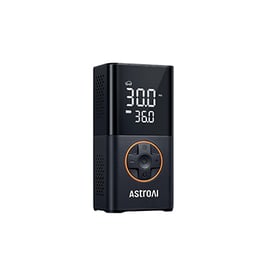
A digital display showing exact percentage is essential. LED bar indicators (4 bars) are too imprecise — you need to know if you're at 55% or 45% to make informed decisions about USB use.
Other Multi-Function Features
Beyond USB power bank capabilities, many jump starters include:
- LED flashlight with SOS and strobe modes — essential for nighttime roadside emergencies
- 12V DC output — powers air compressors, heated blankets, or other 12V accessories
- Wireless charging pad — some premium models can charge Qi-compatible phones
- Built-in inverter — rare but available on high-end models for AC power output
Explore our multi-function jump starters to find the right combination of features.
Frequently Asked Questions
Can I use a jump starter as a power bank?
Yes, most lithium jump starters include USB output ports and can charge phones, tablets, and other devices. However, use this feature sparingly to preserve jump-starting capacity.
How many phone charges from a jump starter?
A 15,000 mAh jump starter can typically charge a modern phone 3-4 times. However, each phone charge uses 15-20% of the battery that's needed for jump starting.
Does using USB drain the jump starter battery?
Yes. Every USB charge draws from the same internal battery used for jump starting. A full phone charge uses about 15-20% of the jump starter's capacity.
Can I charge my laptop with a jump starter?
If the jump starter has USB-C PD output rated at 30W or higher, yes. However, charging a laptop uses 60-80% of the battery — not recommended unless in an emergency.